What Top Professional Services Companies Do Differently With AI in 2026 (2026 Update)

Knowledge workers spend 60% of their time on non-core work like chasing status updates, searching for documents, and switching between tools. For professional services firms, this translates to senior consultants spending nearly a third of billable hours on formatting slides and recreating analyses that already exist somewhere in the firm’s knowledge base. The gap between top-performing consulting firms and the rest isn’t just about talent or methodology. It’s about how they systematically eliminate the productivity drains that keep senior consultants stuck in junior work.
The Professional Services Problem
The data reveals a stark reality across consulting firms: productivity isn’t being lost to complex analytical challenges, but to basic operational friction.
Meeting Overload: Unproductive meetings have doubled since 2019 to about five hours per week, with consultants pulled into status meetings that “could have just been an email.” In client-service work, this compounds as teams coordinate across multiple engagements while managing internal reviews and approvals.
Context Switching Tax: Research from StarFish Medical shows that multitasking and hopping between projects disrupts flow and adds cognitive load. For consultants juggling multiple client deliverables, interruptions can cost 23 minutes of refocusing time each time they switch between engagements.
The Search Problem: In companies with 3,000+ employees, about 450,000 hours per year are spent asking and answering the same questions. For consulting firms, this manifests as teams recreating frameworks, searching for similar client work, and rebuilding slide decks that exist in various versions across different project folders.
Quality Inconsistency: Without standardized processes, deliverable quality varies dramatically based on who creates them. Clients struggle to differentiate between work products that cost $50K versus $200K because the underlying analysis and presentation quality fluctuates wildly.
What Industry Professionals Are Actually Saying
The consulting community has identified specific patterns in their productivity challenges. According to research from Starmind, 50% of knowledge workers say accessible documentation is out of date, and 41% of organizations are affected by knowledge silos. For consulting firms specifically, these silos create cascading problems: - Senior partners develop proprietary frameworks that never get documented for reuse
- Project teams reinvent analytical approaches because they can’t find previous work
- Quality varies based on which senior consultant oversees the engagement
- Junior consultants spend excessive time on formatting instead of learning analytical skills The pattern that emerges across high-performing firms is systematic elimination of “work about work” through automating business processes with AI and process standardization.
By The Numbers: Industry Benchmarks
Leading professional services firms track specific metrics that reveal the scale of opportunity for operational improvement.
Knowledge Reuse Rates Top-quartile consulting firms measure
Knowledge Reuse Rate as the percentage of projects that leverage previous solutions or frameworks. High-performing firms typically achieve: - 60-90% of proposal content reused from standard libraries
- 80-90% of projects using standardized delivery methodologies
- Systematic capture of project artifacts at phase gates for future reuse According to SPI Research’s Professional Services Maturity benchmark, firms with higher knowledge reuse correlate strongly with better project margins and on-time delivery rates.
Deliverable Automation Levels
| Deliverable Type | Top Firms | Average Firms |
|---|---|---|
| Proposals & SOWs | 60-90% automated | 20-40% automated |
| Status Reports | 90%+ automated | 30-50% automated |
| Standard Frameworks | 80%+ templated | 40-60% templated |
| Client Presentations | 70%+ modular | 30-50% modular |
Quality and Consistency Metrics High-maturity firms maintain consistency through multi-layer governance:
Process Standardization
- Documented delivery methodologies across 90%+ of projects
- Standard templates integrated with knowledge repositories
- Formal QA gates with structured review checklists Technology Integration
- PSA/ERP platforms providing unified project views
- Central repositories with robust search and tagging
- Automated workflows for approval and version control SPI Research shows that top-performing professional services organizations combine standardized processes with ongoing measurement and governance around adherence, resulting in higher project profitability and client satisfaction scores.
Strategy 1: Solving “Senior consultants spend 30% of project time on formatting and boilerplate”
The most immediate opportunity for professional services firms lies in automating the repetitive work that consumes senior consultant time. Top firms approach this through systematic deliverable automation.
Template and Component Libraries
Modular Slide Decks: Leading firms maintain centrally-managed libraries of approved slides, frameworks, and analytical components. Teams assemble deliverables from these modules rather than starting from blank presentations.
Automated Formatting: Document generation systems pull content from structured inputs and apply consistent formatting, brand guidelines, and layout standards automatically.
Smart Proposals: Proposal systems combine standard work packages, rate cards, and methodology descriptions with client-specific customization, reducing proposal development time by 60-80%.
AI-Powered Content Generation
Advanced firms deploy
AI systems that:
- Generate first drafts of analysis summaries from structured data inputs
- Create presentation outlines based on project scope and methodology
- Produce executive summaries from detailed analytical work
- Apply firm-specific language and formatting standards automatically RunFrame creates AI-powered deliverable generators that pull insights from past projects, apply your firm’s templates, and produce first drafts that senior consultants review instead of create.
Implementation Results
Firms implementing comprehensive deliverable automation report:
- 25-40% reduction in deliverable creation time
- Senior consultants spending 70%+ of time on analysis rather than formatting
- Consistent quality across all client-facing materials
- Faster project delivery with maintained or improved quality
Strategy 2: Solving “Deliverable quality varies wildly depending on who creates them”
Quality inconsistency stems from lack of standardized processes and governance.
Top firms solve this through systematic quality control embedded in their delivery methodology.
Standardized Delivery Frameworks
Methodology Enforcement: High-performing firms document delivery methodologies with clear phase models, deliverable definitions, and acceptance criteria. These methodologies are enforced across 80-90% of projects rather than used selectively.
Quality Gates: Structured review processes include:
- Mandatory peer reviews at defined project milestones
- Partner/SME reviews for critical client deliverables
- Checklists mapped to methodology phases verifying completeness
- “Red Team” reviews for major proposals and recommendations
Technology-Enabled Consistency
Integrated Platforms: PSA/ERP systems provide unified views of project plans, deliverables, and milestones, enabling consistent oversight across all engagements.
Version Control: Centralized document management prevents teams from working with outdated templates or divergent “local” versions of standard materials.
Automated Quality Checks: AI systems can verify that deliverables include required sections, follow formatting standards, and contain appropriate analytical depth before human review.
Governance and Measurement
Top firms track quality through specific metrics:
- Client satisfaction scores (CSAT, NPS) by engagement and consultant
- Internal QA metrics including frequency of rework and issues found at review gates
- Project profitability correlated with adherence to standard processes
Strategy 3: Solving “No knowledge reuse from past projects when creating new deliverables”
The highest-performing consulting firms treat knowledge as a strategic asset, building systems that capture, organize, and surface relevant insights for new engagements.
Systematic Knowledge Capture
Project Closeout Processes: Mandatory post-engagement reviews capture:
- Analytical frameworks and methodologies used
- Key insights and recommendations
- Client feedback and lessons learned
- Reusable templates and tools developed
Structured Repositories: Knowledge management systems with:
- Robust tagging and categorization by industry, function, and methodology
- Integration with project workflows for seamless access during delivery
- Search capabilities that surface relevant past work automatically
AI-Enhanced Knowledge Discovery
Advanced firms use
AI to:
- Automatically tag and categorize new content based on project characteristics
- Surface relevant past work when consultants begin new analyses
- Identify knowledge gaps where the firm lacks documented expertise
- Generate insights by analyzing patterns across multiple similar engagements
Cultural and Process Integration
Incentive Alignment: Top firms incentivize knowledge sharing through:
- Performance metrics that include knowledge contribution and reuse
- Recognition programs for consultants who build reusable frameworks
- Career advancement criteria that value knowledge development
Workflow Integration: Knowledge reuse becomes automatic when:
- Project planning includes mandatory searches for relevant past work
- Proposal development requires leveraging existing frameworks where applicable
- Quality gates verify that teams have considered applicable previous insights
Implementation Roadmap Successful
AI deployment in professional services requires a phased approach that builds on existing strengths while systematically addressing operational gaps.
Phase 1: Foundation (Months 1-2)
Assessment and Planning
- Audit existing knowledge repositories and document standards
- Map current deliverable creation workflows
- Identify highest-impact automation opportunities
- Establish baseline metrics for productivity and quality Quick Wins
- Deploy AI writing assistants for routine document creation
- Standardize core presentation templates and frameworks
- Implement basic search improvements for existing knowledge bases
Phase 2: Systematic Automation (Months 2-4)
Deliverable Generation
- Build template libraries for common deliverable types
- Deploy AI systems for first-draft content generation
- Integrate automation with existing PSA/ERP platforms
- Train teams on new workflows and quality standards Knowledge Integration
- Systematize capture processes for new project insights
- Implement tagging and categorization standards
- Deploy AI-powered search and recommendation systems
Phase 3: Advanced Capabilities (Months 4-6)
Cross-Project Intelligence
- AI systems that identify patterns across multiple engagements
- Automated insight generation from historical project data
- Predictive analytics for project planning and resource allocation Continuous Improvement
- Feedback loops that improve AI accuracy over time
- Regular assessment of productivity gains and quality improvements
- Expansion to additional deliverable types and use cases
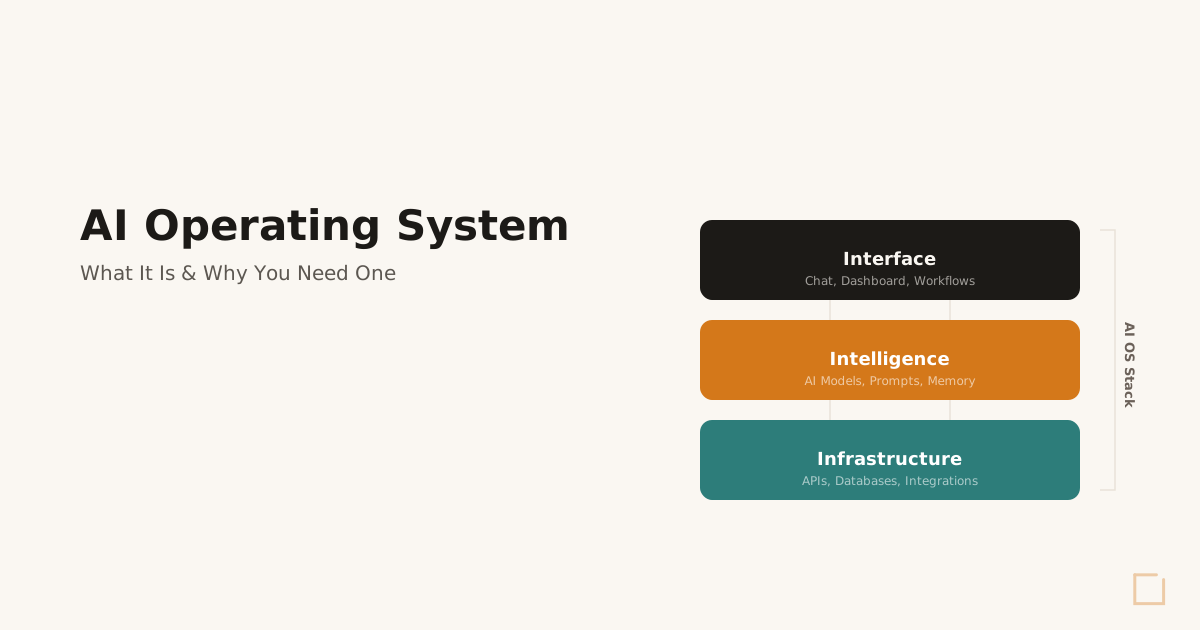
How RunFrame Approaches This RunFrame’s AI Operating
System addresses the specific challenges professional services firms face with deliverable creation and knowledge reuse.
Deliverable Automation: Our platform integrates with your existing PSA systems and document repositories to generate first drafts of presentations, reports, and proposals. The AI learns your firm’s methodology and applies it consistently across all deliverables.
Knowledge Intelligence: RunFrame’s system automatically captures insights from completed projects, tags them appropriately, and surfaces relevant information when consultants begin new work. This eliminates the manual search process that consumes hours of senior consultant time.
Quality Standardization: Built-in review workflows ensure all AI-generated content meets your quality standards before client delivery. The system learns from feedback to improve output quality over time. Our AI for Consulting Firms guide provides detailed implementation strategies, and our Professional Services industry page shows specific use cases for your sector. The firms seeing the biggest impact from AI deployment are those that treat it as an operating system upgrade rather than a point solution. They’re not just adding AI tools, they’re rebuilding their delivery methodology around AI-enhanced capabilities. Before embarking on your AI journey, it’s critical to assess whether your organization has the foundational elements in place for successful implementation. Our comprehensive guide on how to master AI readiness assessment in 2026 provides frameworks for evaluating your current state and identifying gaps that need to be addressed before deployment. Ready to assess your firm’s AI readiness? Take our AI Readiness Scorecard to identify your highest-impact automation opportunities, or book a discovery call to discuss your specific challenges with our team.
Ready to Deploy AI? Book a Free Assessment
30 minutes. No pitch. No pressure. Just a conversation about what is possible for your company.
Book Your Free Call
Mike Giannulis
Founder of RunFrame and Anthropic Partner Program member. 20+ years in direct response marketing. Building AI operating systems for companies with 5 to 50 employees.
Ready to See What AI Can Do for Your Company?
30 minutes. No pitch. No pressure. Just a conversation about what is possible.
Book Your Free Assessment